A step-by-step confession guide for returning Catholics
Last updated: December 11, 2024
The Sacrament of Reconciliation, also known as Confession, is one of the most profound yet sometimes intimidating experiences in Catholic life. Whether you’re returning to the confessional after many years or seeking to deepen your regular practice, understanding how to approach this sacrament can help transform it from an anxiety-inducing obligation into a genuinely healing encounter. This guide will walk you through each aspect of confession—from the spiritual preparation beforehand, to the actual rite itself, and the steps to take afterward. By breaking down this sacred practice into clear, manageable steps, we hope to help you approach confession with confidence and an open heart, ready to experience God’s mercy and forgiveness.
Step 1: Make time for reflection
Many may realize the weight on their backs in the need to go to confession, often with particular sins in mind. However, unless there is some dire or urgent life-or-death type of scenario, its best to set aside some time to prepare properly for the sacrament. It’s important to identify and be prepared to dispatch all sin which one may have fallen into. Here’s the best steps to prepare for a confession:
- Find an examination of conscience that you’re most comfortable with. An examination commonly is a list of dozens of sins posed as questions to ask oneself to illuminate your sin.
- Set aside about 20-30 minutes of quiet, dedicated time alone to reflect and read through the examination. Take notes if necessary to remind yourself of where you’ve missed the mark.
- Before starting your reflection, make a short prayer requesting guidance in making a complete confession. This can be simple request for the Holy Spirit to guide you or when in doubt, the prayer during the Compline may be used “God, come to my assistance. Lord, make haste to help me.”
- Walk through each query in the examination and ponder if you’ve fallen into each particular sin.
- Some will clearly be a ‘no,’ others ‘perhaps’ or ‘yes.’ Others may make your cringe from embarrassment, even to yourself. Despite your feelings, don’t hide from any and accept that you want to be free of those sins.
- Some sins you may have been ignorant of and had no idea they were sins. Note these as well to confess, however note that you’re less culpable in most these cases.
- When you identify a sin you’ve committed, try to have a rough idea of how many times you committed them and to what degree if relevant.
- There’s a hierarchy of sin of more dangerous sin (“mortal sin” such as murder or adultery) and less dangerous sin (“venial” such as losing your temper). Aim to confess all sin, but especially focus on mortal sin. No matter how grave it is or how degrading you think it will be to do so, it’s the only way to release the claws the evil one may have in you.
- Make a commitment with each identified sin to resolve not to continue in it any longer. Make note of recurring sin you struggle with and don’t have the strength or ability on your own to free yourself, or sins you struggle to align your heart to commit to discontinue.
- Bring to mind the last time you were in confession and record approximately how long ago it was. Have no concerns if it was a week ago or 40 years ago as nothing is more pleasing to the Lord then a sinner coming to him for repentance (Hence several parables including the prodigal son, the lost coin, the lost sheep).
- Ready your act of contrition, this is a prayer of commitment you make to God turn away from sin and ask for His grace. If not memorized, print or bring a written copy to your confession.
- Know when and where you’re going to confession. Many parishes do them on Saturdays in the afternoon and at the rectory upon request. Check your local parish for details.
Step 2: Arrive and Pray
It can be nerve-wrecking to go to confession if it has been a long time, or you got some heavy sin that’s burdening you. Know that no matter how unprepared you may think you are, the priest in the confessional will counsel you and will be joyful you are there seeking the Lord’s forgiveness. Here’s what to do while you’re awaiting your turn. 1. Leave your phone in your car if possible, otherwise power it down to avoid distractions and protect the ‘seal of the confession.’ 2. Find the queue of people awaiting confession and pray that you may make a good confession. When in doubt, the Jesus prayer is ideal “Jesus, son of God. Have mercy on me a Sinner.” Be aware that parishes may have different setups for confession of being “face-to-face” or behind the screen (you’re anonymous), or sometimes both and the penitent can choose. Note that the Sacrament is unique in that there’s a ‘seal of confession’ in which the confessor can not disclose what you tell him, no matter how grave. 3. Be calm, if your nervous, know that the priest has heard worse than you and is not there to judge you, but to free you from sin.
Step 3: Make your confession (common form of Reconciliation)
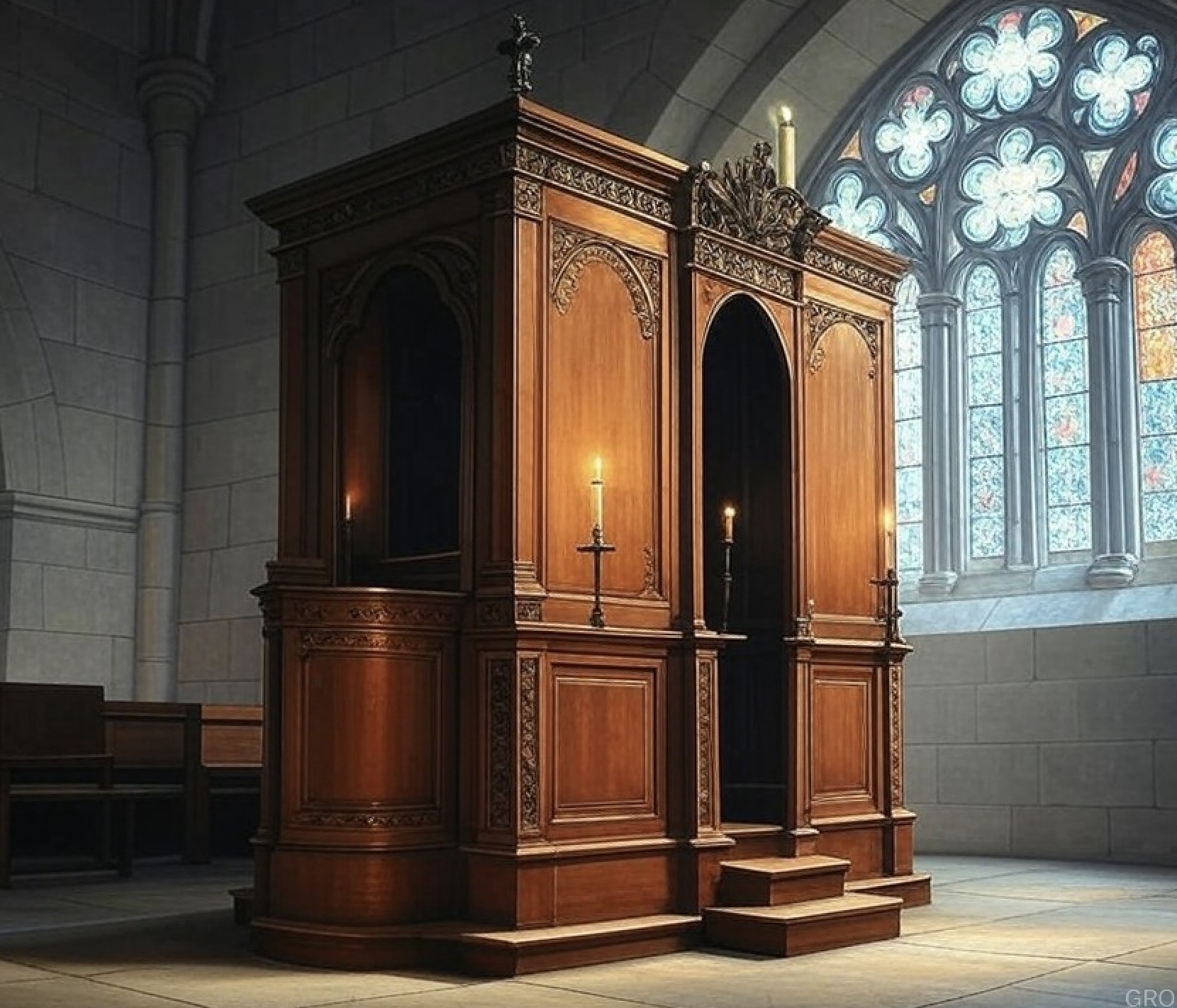
Walking in to the confessional is uniquely a Catholic experience. Whether the bright light in a chair next to the priest or in a dark, curtain covered box know that you’re choosing life over spiritual death, and approaching the throne of mercy is in itself a grace.
- Sit in the chair (common if face-to-face) or kneel (in a confessional).
- Greet the priest and make the sign of the cross. The priest may offer a blessing before you start.
- Say “Bless me father, for I have sinned, it’s been X weeks/months/years since my last confession.”
- Walk through your sins and be open. Speak of the depth and count of sins and if one is a particular struggle then please acknowledge.
- The priest may ask questions, especially if you’re vague. This is common so they can understand the depth of sin you’ve committed and what underling root themes or motivations may be at hand.
- The priest may give you counsel regarding your sins. Sometimes it’s comfort, sometimes it’s affirming, other times it’s challenging. In all cases it’s rooted in love to help one make the proper adjustments.
- The priest will typically give you a penance which is an act you must take to repair the harm caused by sin (CCC 1494), it may be a few prayers to say or something more substantial.
- The priest will ask you for an act of contrition, recite the prayer. The priest may start blessing, absolving you while you’re praying the contrition, continue the prayer until completion.
- The priest will give you absolution. There are a few different forms, but all include him saying “I absolve you” along with a blessing. Bless yourself with the sign of the cross during the absolution.
- Thank the priest, and you’ve been released of your sin, go in peace.
Step 4: Fulfill your penance.
Fulfill the penance your confessor requested of you. If it’s a prayer, find a pew near the Blessed Sacrament or Tabernacle, kneel and pray. Take a moment to bathe in the grace that has been given to you. Leave when you’re ready.
Making a good confession is a profound act of faith, humility, and trust in God’s mercy. While the steps we’ve outlined may seem detailed, remember that at its heart, confession is simply a homecoming—a return to the loving embrace of a Father who eagerly awaits us. Don’t let perfectionism or fear keep you from experiencing this beautiful sacrament. The priests who administer confession understand human nature and are there to help, not to judge. Whether it’s been weeks or decades since your last confession, know that there’s no better time than now to experience God’s healing forgiveness. As you leave the confessional, carry with you the peace that comes from being reconciled with God and the Church, and let this renewed grace strengthen you on your spiritual journey.